
TEMPUR-PEDIC
I’ve photographed campaigns in some pretty unusual places over the years, from the highlands of Ethiopia to the plains of Iraq, and I've been fortunate to be part of projects that were both challenging and incredibly rewarding. Somewhere along the way, I got used to the idea that the complicated jobs would probably involve an airplane, a passport, unpredictable weather or some combination of all four. So when an 12-day studio project for Tempur-Pedic and Tempur-Sealy came across my desk, I didn't necessarily expect it to become one of the more complicated and formidable productions of my career.
It essentially started with a spreadsheet. There were roughly 30 products spanning pillows, mattress toppers and bed-in-a-box mattresses, along with references and priorities that would eventually need to be captured, selected, retouched and delivered. Some of the photography would be clean product imagery silo on white, some would be styled-bedroom without talent, and some would feature talent in that styled-bedroom. Then within those categories were multiple compositions. When you add it all up, we were photographing thousands of individual images across a fairly rigid set of requirements.

I had worked with Tempur-Pedic previously, so I had a good understanding of what they typically needed and the usage for their deliverables. Rather than receiving a fully developed treatment and locked production plan, we were working primarily from a product list, references, and the knowledge we'd built from previous projects. The work also had to function across multiple retailers, including Amazon, Home Depot, Walmart and Wayfair.

During estimating and pre-production, my producer Bryan Sheffield and I found ourselves working backward from that spreadsheet and trying to translate it into something that could actually happen inside a studio. How many days would we need? How many days required talent? What crew would be necessary? How quickly could we move between products? How would motion and still photography share the space? And once we had thousands of images, how were they going to move through client review and post-production quickly enough to hit the final deadline?
When I started doing the math, the schedule wasn't “mathing.” A more conventional one-camera approach looked like it could require somewhere in the neighborhood of 30 days of production time which equated to hundreds of thousands of dollars in crew fees, talent fees, studio time and equipment rental. Moreover, simply adding overtime to already long days wasn't a real solution and I wasn’t interested in building a production plan around the assumption that everyone would simply work faster. We needed to work smarter.
That thinking led directly to the five-camera setup.
Rather than continually repositioning one camera for straight-on, three-quarter, profile, overhead and tighter compositions, I designed the studio around four static camera positions that could remain in place and hard-wired, with a fifth camera able to float handheld. Once we committed to that idea, the cameras began dictating almost everything else. Each bedroom environment was built around a relatively tight footprint, so furniture, product, talent, lighting, grip and crew all had to work around those predetermined viewpoints. A combo stand that was perfectly fine from one camera might suddenly be visible from another, which meant we had to think of the entire room as one interconnected system rather than a series of individual setups.
The lighting had to follow the same philosophy. We couldn't light one hero angle beautifully and then rebuild everything when we moved to another camera. We needed a larger lighting environment that could remain soft, natural and consistent across several compositions at once. On paper, the diagram looked organized and relatively simple. In reality, the studio became a controlled maze of large diffusion, scrims, flags, cameras, monitors, digital carts and crew surrounding what ultimately looked like a very simple bedroom in the final photograph.

At the same time, the photography was only one part of a much larger production. Nadus Films handled the broader infrastructure around the project, including production design, set building, talent casting, wardrobe, hair and makeup, craft services and all of the logistics required to keep something of this scale moving.


We had two separate styled environments, one for Walmart and one for Wayfair, which became another important part of the efficiency plan. By the time all of this was coming together, the original spreadsheet had turned into a much larger production ecosystem. The finished photographs were intentionally simple, but there was nothing simple about what was happening behind the scenes. That’s one of the things I love about commercial photography. The final image should often feel effortless, even when everything surrounding it is anything but.
Before we got further into the pre-production weeds, we had to figure out what this thing was actually going to cost. We took the scope we had built and started putting real numbers against it: 11 production days, a dedicated pre-light day, the two bedroom sets, photography and motion, equipment, location, post-production, retouching and everything else required to keep the production moving. Once we had a realistic first pass, the client came back with a working budget and we started figuring out where we could tighten things up without cutting something we were going to regret later.
By the time everything was accounted for, it was the single largest studio production of my career, with a six-figure production budget. On December 23rd, we landed on a scope and budget that worked for everyone, and the contract and statement of work were signed. Merry Christmas!
Fast forward one month, on January 23rd we had welcomed our daughter Celeste into the world, so I was deep in pre-production while also adjusting to life with a newborn at home. My wife and family stepped in in a huge way, and I genuinely couldn't have taken on a project of this scale without their support. It added another layer of pressure, but it also forced me to be disciplined with my time, trust the preparation and really lock in when it was time to work.


Before the first official production day, we dedicated an entire day to pre-lighting and testing. That gave us the opportunity to work through the camera system, refine the lighting, solve technical issues and figure out how mobile different parts of the set needed to be before the full production was underway. On a project this complicated, that day was incredibly valuable because every problem we could solve in advance was one less problem we had to solve while the client and full crew were waiting.


It also gave me time to think through the balance between creativity and what the photography actually needed to accomplish. At the end of the day, these were mattresses, pillows and mattress toppers. The images could be elevated and visually interesting, but they still had to accurately communicate the product.

Moving between the Walmart and Wayfair sets also meant recreating the same camera compositions and lighting as precisely as possible. My second assistant Ryan Grant and I spent a meticulous amount of time documenting lighting ratios for each camera position, marking tripod locations with color-coordinated spike tape, and measuring both the distance and height of every camera. If Camera A needed to be 48 inches off the floor and 13 feet from the bed, we wrote it down. If a light needed to be at a certain power level for a particular angle, we documented it, even if it was sometimes our own personal chicken scratch. When it came time to transition from one environment to the other, we wanted to recreate the system instead of relying on memory.
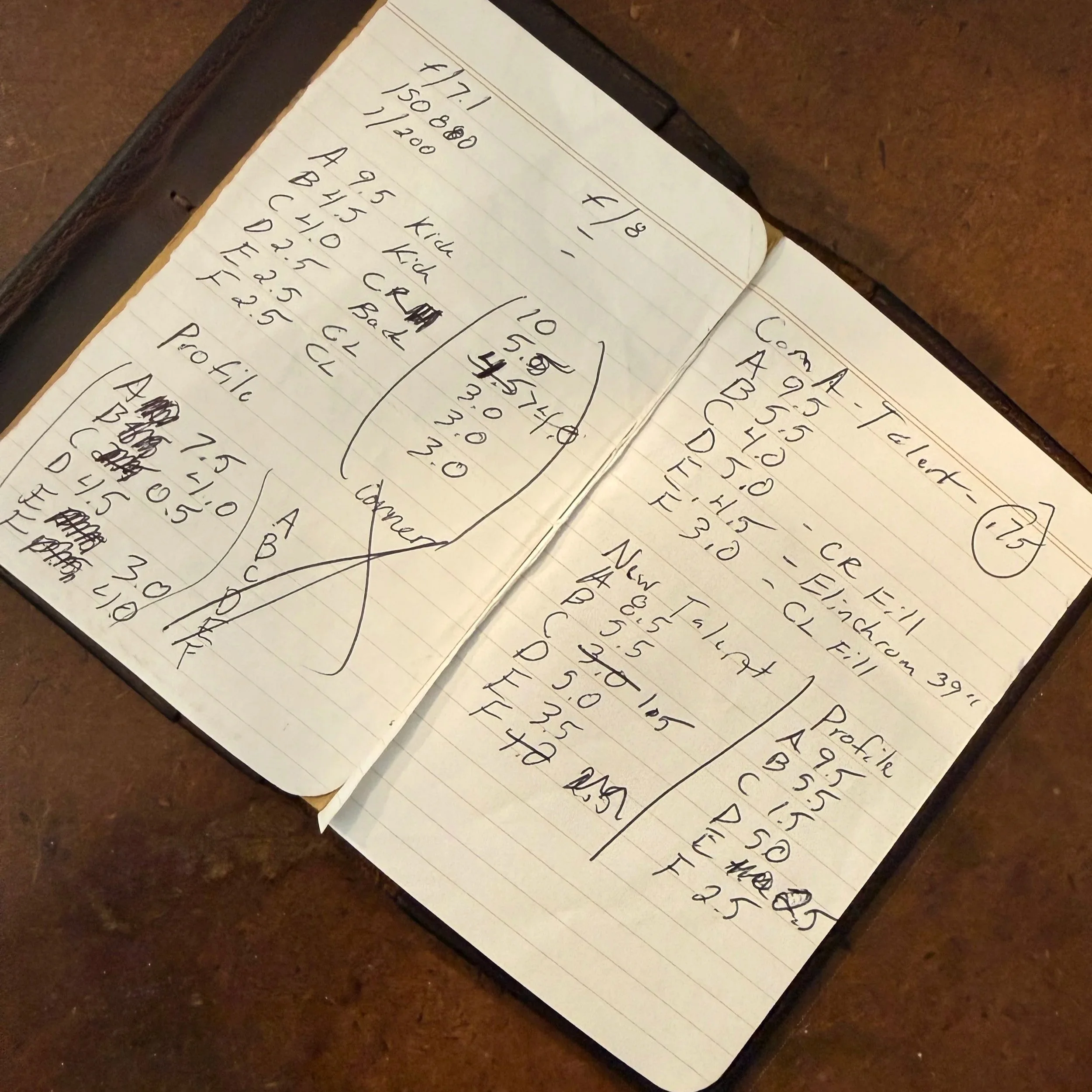
That preparation mattered because a major transition could still take close to three hours. Once a set came apart, we needed to know we were truly finished with it, or at the very least know exactly how to put it back together.
By the time the first production day arrived, I felt prepared. Then, naturally, things started changing. Some products were coming from overseas, and there were times when we weren't entirely sure something would arrive before its scheduled day. Shots were added, others were removed and products shifted.


That’s where our line producer, Kelsey Forren, became critical. There were simply too many moving pieces for me to concentrate on directing, lighting and photography while also managing the client, product, crew, schedule and every production conversation happening around us.
The schedule became a living document. As the shot list continued to change, Kelsey was the one helping us navigate those hiccups. If we started losing time, we had to determine whether similar setups could be grouped together or whether another department could work simultaneously somewhere else.

She also became an important bridge between the client and the crew. A lot of the feedback happened conversationally and in real time rather than through formal written notes, and over the course of the project she became very good at understanding the client's shorthand and translating that feedback into clear direction for the team.
Concise communication, responsiveness and making sure the client feels heard and supported are just as important as what happens behind the camera. Having Kelsey managing so much of that communication allowed me to stay focused on the photography while knowing that the client relationship and production itself were being taken care of.

I was thinking about the client experience in the physical studio as well. Between pre-light and the 11 production days, we were spending a lot of time together in a space where the main overhead lights often needed to remain off because of the photography. A large dark studio can start to wear on people after several days, so we brought in rugs, lamps, comfortable chairs, candles and essential oils and created pockets of warm ambient light around the client area.

I wanted the client and the crew experience to be calm and coordinated. For me, that was part of the job. I’ve always believed that customer service is a huge part of commercial photography. The photographs obviously matter, but so does the experience of making them.
Once we were fully into the production, another challenge started to become more apparent: visual variety. Much of my lifestyle work naturally gives me a lot of variables to work with, whether that's different environments, people interacting or movement within the scene. Here, we were deliberately working inside a much more controlled framework. Even with the introduction of different props and doing my best to create micro-stories, it was still one person with one mattress, one pillow, or one mattress topper. So I had to get creative.
I started paying more attention to small changes. We could move the talent to the opposite side of the bed, alter a gesture or slightly adjust the composition without disrupting the entire setup. Occasionally I would unlock a camera from the tripod and shoot around the set looking for another perspective, but I also had to keep reminding myself why those cameras were locked in place in the first place. We weren't trying to create endless variations of every image. We needed the required photography, enough variety across the overall library, consistency from product to product and a production that kept moving.
The products themselves demanded another kind of patience. Still photography is incredibly unforgiving. A wrinkle, fiber, fold or shadow that disappears instantly in motion becomes permanently frozen in a photograph. A pillow being manipulated by a stylist might look perfect from three feet away, but completely wrong through the camera. Because we were primarily lighting with strobes, we couldn't always judge the final result in real time. We would adjust the product, take a frame, review it on the monitor, adjust it again, take another frame and repeat. Sometimes the difference between a photograph that looked “almost right” and one that was approved was extraordinarily small. That process, multiplied across dozens of products and hundreds of final images, is where an enormous amount of the work actually happens.


Meanwhile, another production was effectively happening inside the production: post.
With approximately 300 final images moving toward a tight delivery deadline, there was no realistic way to wait until the 11 production days were complete before beginning retouching. We needed photography, client selects and post-production to happen at the same time.
Our digital tech, Adam Mescan, carried a massive amount of that responsibility. As images were captured, he was naming files according to retailer, product, camera angle and image number, exporting them from Capture One and uploading them into the proofing gallery. The client could begin making selects while we continued working through the shot list, and once those images were selected, they could move directly to the retoucher.


Adam and I were communicating with our retoucher Jordan Hartley throughout the production, often through video calls, passing along notes and working through client feedback while we were still on set. Instead of photography ending and post-production beginning, the two processes overlapped almost completely.
Toward the end of production, client selections began to slow down. When selects slowed, retouching slowed, and suddenly something happening in one corner of the workflow had the potential to affect the final delivery.
That was another reminder that a production like this is never really about one task. You have to understand what today’s decision does to tomorrow’s workload. By the time we finished the final production day, I was exhausted, relieved and already thinking about what I would change the next time.
When I think back on the project now, I keep coming back to that original spreadsheet. On paper, it was roughly 30 products, hundreds of images, retailer requirements and references. By the time those rows and cells became photographs, dozens of people had brought their experience, judgment and craft into the room.

That feels especially important at a moment when our industry is having a larger conversation about artificial intelligence. AI can already generate a convincing bedroom, a person lying on a mattress or a perfectly shaped pillow, and those tools will only get better. What they don't replicate in the same way is the process that created this body of work. These were real products that needed to be represented accurately. Real sets had to be built. Real talent had to be directed. Real people had to make decisions, respond to problems, communicate with one another and find solutions together.
To me, that human part of commercial photography is still incredibly important. The work has never only been about the final image. It's about collaboration, problem-solving, customer service, trust and creating something together that accurately represents a real product and a real brand. The photograph is the visible result, but all of those decisions, conversations and experiences are embedded in it.
AI will continue to change how images are made, and I’m sure it will become another tool in the creative process. But it can’t replicate a client, photographer, producer, art department, talent and crew standing in the same room, solving real problems together and responding to one another in real time.


After 12 days, thousands of photographs and countless small decisions, the biggest takeaway is pretty simple: don’t sleep on the details. They’re what hold the production together, shape the client experience and, ultimately, make the final photographs possible. And as our industry continues to change, I think the people behind those details matter more than ever.


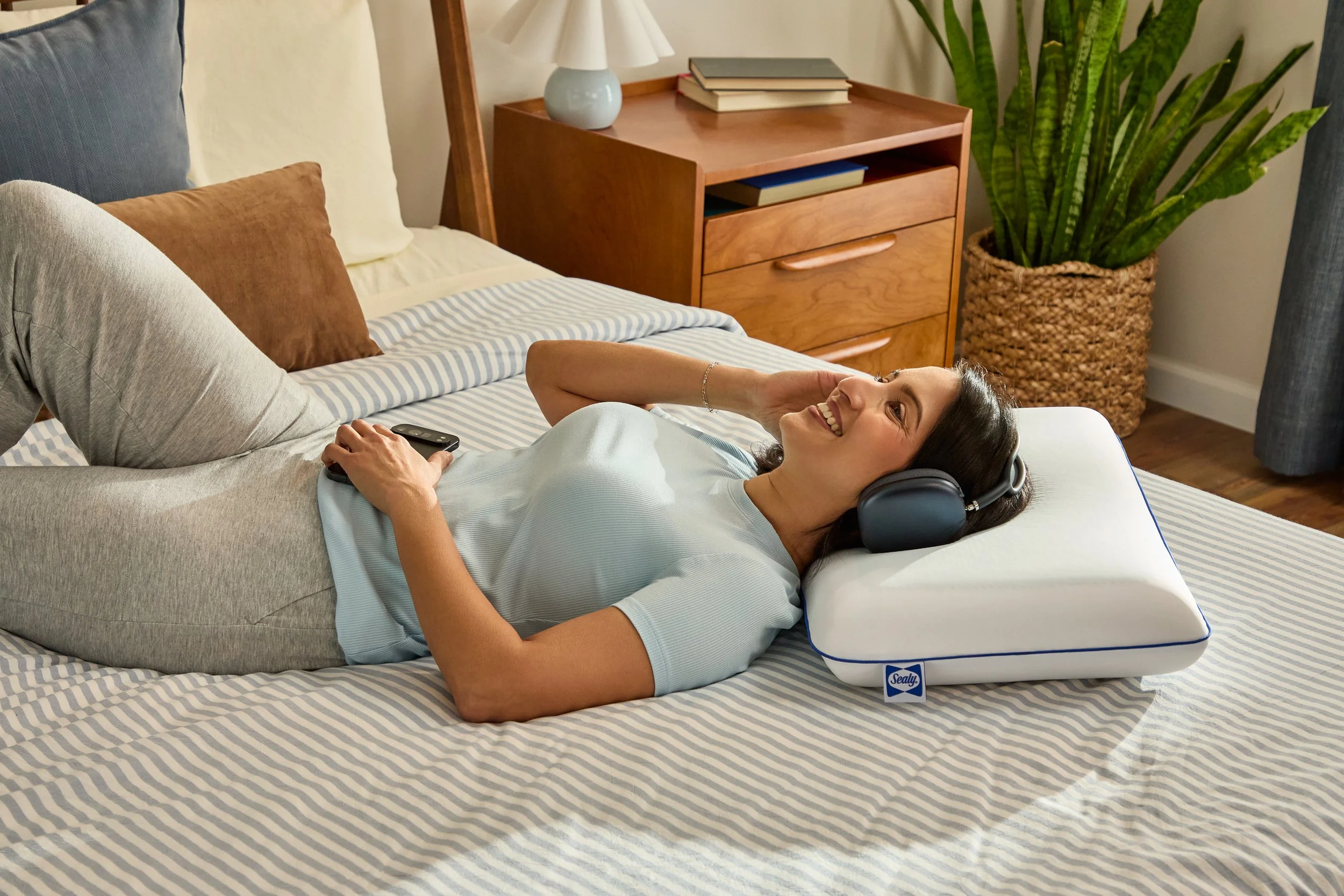

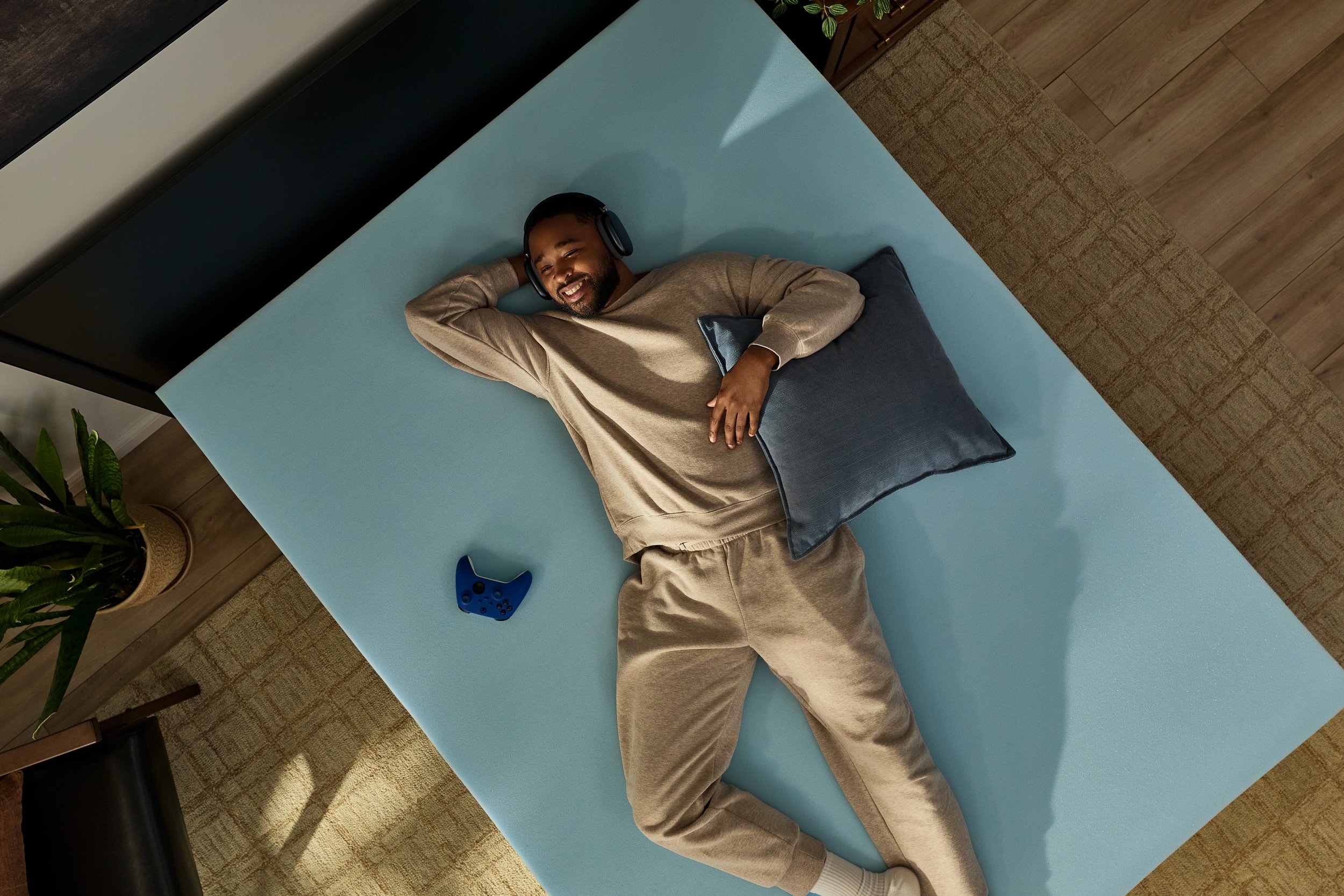


A project of this scale is never the work of one person. A huge thank you to everyone who brought their time, talent and attention to this production, and especially to the Tempur Sealy team for the trust and collaboration throughout the project. I’m incredibly grateful to Nadus Films and the entire crew for helping turn a spreadsheet and an ambitious production plan into something real.
Client: Tempur Sealy International (Liz Layne, Rachel Dame)
Photography: Clay Cook
Production: Nadus Films
Producers: Ryan Galanaugh, Mark Minnery
Line Producer / 1st AD: Kelsey Forren
Production Assistant: Blake Peterson
Digital Tech / DIT: Adam Mescan
First Photo Assistant: Luke Franke
Second Photo Assistant: Ryan Grant
Set Construction: John Travisano
Production Design + Art: Jo Hall
Art Assistant: Jacob Weaver
Art Assistant: Emma Anderson
Hair, Makeup & Wardrobe: Lauren Sutton
Wardrobe: Kate Roach
Casting: Helen Wells Agency